Signed in as:
filler@godaddy.com
In 2007, the LTA followed Judy Murray's advice, which directly lead to one of the most dramatic and incredible sporting performance upturns in the history of sport. Great Britain had zero players ranked in the Top 100 ATP Doubles list in 2007, yet after Louis Cayer's appointment (which came from Judy Murray's recommendation), Great Britain have been a men's doubles powerhouse for the last 10 years, with 16 Grand Slam titles from 7 different players, and 5 separate World No.1's. Earlier this year, Great Britain also had an insane 5 players ranked inside the Top 10! Currently, we have 4 ranked inside the Top 20. Louis Cayer is still the man in charge of GB men's doubles.
Judy Murray was already established as one of the best coaches we've ever had in this country, given her strong influence in developing Andy and Jamie. In this case, the LTA followed her suggestion and the nation reaped the benefits.
So, in 2026, after 50 long years of continuous under-achievement in the singles game, will the LTA follow Judy Murray's recent advice to follow the Italian junior development model in order to turn our fortunes around in singles?
The answer will almost certainly be no, as Judy has had a rocky relationship with the LTA over the years and the LTA have invested a huge amount into the current pathway model. However, I was intrigued by the whole thing, which prompted wider questions, and has culminated in this article! All the following questions will be answered and more:
What exactly did Judy Murray say and why?
Have GB's best recent and current singles players gone through the LTA system that Judy Murray has criticised?
What exactly is our junior development pathway in the UK, and how has it changed over the last 40 years?
What is the Italian version, and why has it been so successful since it was developed in 2009?
What do the most successful countries in the world at producing ATP/WTA players do, including global powerhouses Spain and USA?
What exactly do successful countries do differently to us?
How did one coach in a small town produce 5 Top 100 ATP players in the same era?
Which nation is the GOAT at producing pro players, and how do they do it? Both answers may be surprising to you!
I've thoroughly researched and fact-checked all that is presented here. Ultimately, I want to create a world class resource for all tennis parents on these pages, and this new addition is part of that. If you have a child on the performance tennis journey, this is for you. You might also want to read the article so you're better equipped to contribute to the next 'state of british tennis' debate you have down the pub or at your local club! I'm sure coaches will find this an enlightening, inspiring, and fascinating read too!
Let's start by having a look at what the most successful countries are doing.

Judy Murray - One of the most successful tennis coaches the UK has ever produced
Except for one solitary week, Spain haven't had less than 5 Top 100 ATP singles players since 1988. USA, France and Argentina have never had less than 5 Top 100 ATP singles players since the ranking system was introduced in 1973.
Spain have been producing a conveyer belt of top players for decades, regularly having 10+ in the ATP Top 100. They produced a GOAT in Nadal, and currently have a likely future GOAT in Alcaraz, not to mention the exciting Jodar who has burst on the scene this year. They've also had 4 other men and 3 different women winning Grand Slam singles titles since 1990.
Spain's system is founded on a huge network of collaborative clubs and academies, with a rare but refreshing attitude from the national governing body of leaving them to it. Whilst they ensure high standards for coaches to become qualified, they then completely step back and allow private coaches and clubs/academies to have full autonomy on developing the countries most promising juniors. They provide 'no strings attached' funding for elite prospects, and there is no functioning national training centre.
Spain's reputation as a world class nation in developing pro players also mean that many international players (such as the Murray's) move to Spain in their mid-late teens to help make the push to pro ranks. However, Spain's elite academies can be expensive, which often makes the US College route with its abundance of scholarships more appealing if finances are an issue.
Another key feature of the Spanish system is the collaboration between all training venues which fosters a 'working together for the greater good' environment and philosophy. There is an open-door policy for players from neighbouring academies to be welcomed for a high-intensity training block or for weekend match practice. This extends to a coach from a smaller club bringing a player for the day, with the coach permitted to be on-court, observe the academy's drills, take notes, and exchange ideas with the academy’s head coaches.
The shared goal is often explicitly stated by Spanish coaches: to keep the national standard of Spanish tennis at the top of the world, which supersedes individual club politics. Legendary Spanish coaches who built the modern system, such as Pato Álvarez and Lluís Bruguera, historically chose to share their training methods openly with rival academies rather than keeping them secret, a trend which continues today.
The vast majority of spanish coaches and venues are teaching a similar variation of a shared philosophy, based around high-volume clay-court basket drills, extreme physical resilience, tactical patience, and intense footwork. Spain has always traditionally developed players with heavy topspin, incredible consistency, and a forehand that is a real weapon. The system also prioritises competitive matchplay through a vast network of low-cost local tournaments.
Toni Cascales (The legendary coach who developed former World No. 1 Juan Carlos Ferrero) states the baseline trait for success in the Spanish system is a desire for junior players to show "hard work and docility," meaning that being completely coachable, humble, and open to rigorous learning are prioritised over early junior success.

The Bruguera Tennis Academy, one of many world class Spanish academies
In fact, they regular have 10-15 players ranked inside both lists, showing a rare equal dominance in producing both male and female players.
The USA has relied on a de-centralised system for much of its history, doing little more than funding top players in the 80's and 90's, and relying on independent clubs, academies, and coaches to develop them.
However, they briefly went down the centralised route between 2008-15 when Patrick McEnroe took charge and felt a change was needed to address the rise of other nations as tennis powerhouses. Top 12-16 year olds were given an ultimatum to move to a central training hub in Florida to live and train or lose all funding and wildcards. Upon moving, they were completely severed from their original coaches, who weren't allowed any further involvement with their training.
Despite heavy criticism of the system, it continued for 7 years. The worst ranking lows in US tennis history that came during the end of this period finally proved the catalyst to abandon it. It is widely accepted that this period heavily damaged the transition of top junior players to the pro ranks, but as many as 50% of top ranked juniors at the time rejected the system and stayed private, including Taylor Fritz, Frances Tiafoe, and Sloane Stephens.
America reverted to a similar de-centralised system that had served them so well in the past. They fund top prosepcts, and whilst there are only a handful of kite-marked academies that work hand in hand with a huge network of private ones, they no longer stipulate where they train or who they train with.
Their NCAA College system also really stands them apart from other top nations, allowing players to go to college and have the highest level training and competition environments integrated within this dual education/tennis pathway. There are also around 2000 scholarships awarded into Div 1 and Div 2 US Colleges each year, either part or full.
There is huge demand from international players too, with around 60% of newly registered freshman coming from abroad each year.

College Tennis - The engine room where top juniors bridge the gap to the pro game

The Tandil anomaly - How did a small isolated town (roughly the size of Guildford) 200 miles south of Buenos Aires produce 5 top 100 ATP players in the same era?
One coach, one club, five top 100 players; Del Potro, top 3 and US Open champion 2009 (beating Federer at his peak in the final), Juan Monaco, top 10, Mariano Zabaleta who peaked at 21, Maximo Gonzalez was top 60, but top 10 in doubles, and Diego Junqueira who peaked at 68. These players stayed at Tandil for almost the full duration of their junior development, some transitioning from the club straight to the tour, others moving to international academies only at ages 15-17.
Just to put this into perspective, during the period of late 2008/early 2009, all 5 of these players were ranked inside the top 100 at the same time. This was achieved by one man at one small club, and is something that entire nations with good tennis pedigree struggle to do. GB included as we went 45 years without ever having 5 top 100 ATP players at the same time.
Anyway, back to Tandil! The isolated location of Tandil provided a 'zero distractions' environment which allowed young players to stay fully focused on their tennis day in day out, and they were able to keep pushing each other to the next level.
Marcelo Gomez (pictured with a young Del Potro) was the coach in charge, and the mastermind behind this extraordinary success. Let's find out some more about him.
His core coaching philosophies are as follows:
Mental resilience: He designs basket drills that intentionally push juniors to their physical limit. A typical Gómez drill involves feeding 80 to 100 balls continuously at a frantic pace, forcing the player to run corner-to-corner.
Individual approach: When training Juan Mónaco, Gómez built a classic, heavy-topspin clay-court game. But when he saw the massive, long-limbed frame of a young Juan Martín del Potro, he threw out the traditional Argentine manual. He adapted his teaching to fit Del Potro's unique physiology, building a flat, devastating hard-court game.
Caring for the player as an individual: Gómez fiercely rejects the modern touring coach model, which he views as transactional and corporate. He views his role at Club Independiente as that of an educator and a guardian. He spends hours talking to his players about their school grades, their family lives, and their emotional well-being. He explicitly states that to build a tennis champion, you must first build a stable, disciplined human being. This intense emotional trust is a big reason why top players like Del Potro stayed loyal to a small-town club throughout their entire childhood.
No frills/no luxury: Club Independiente did not have the luxuries of modern elite academies. Gómez relied on the club's clay courts, a basket full of worn-out tennis balls, and a hitting wall for players to perfect technique or perform endless repititions. He teaches juniors that luxury creates weakness. Training in cold winters on poorly swept clay courts with heavy balls teaches a player never to make excuses when they face adversity on the glamorous ATP Tour.
Gomez has no interest to work in a fancy academy, or to go out on tour with his players. He continues to run his insanely successful tennis program in Tandil.
France also have a long history of having numerous players in the Top 100 (12 currently), but like Argentina, without the stand-out stars who reach No.1 and are Grand Slam winners. In fact, France has never had a male No.1 ranked player, and Yannick Noah was the last Grand Slam champion back in 1983. The only female player to reach No.1 was Amelie Mauresmo 20 years ago, and she also won 2 Grand Slams. Marion Bartoli was their most recent Grand Slam winner, winning Wimbledon in 2013, but she famously rejected the governing body's pathway at the time in order that her father (who was a doctor by profession) remained her primary coach. Unlike Argentina, France have an abundance of financial resources at their disposal.
France have always had a highly decentralised network of small clubs and regional communities working together to support promising juniors, with around 7000 clubs receiving funding for this purpose. At the same time, they have a centralised funnelling system that funnels top players from smaller clubs into regional centres and then to the national centre in Paris. It used to be expected that all clubs and coaches followed this funnelling system, with repercussions such as funding cuts if they didn't.
That all changed in 2021, when Gilles Moretton became head of the French Tennis Federation (FTT). With a rise in private academies throughout the country, the FTT mandated that players no longer had to move to the regional and national centres. Moretton said at the time “We must acknowledge the quality work done in the private sector and stop snubbing it and shutting it out. We're going to create this public-private alliance, with training choices, training locations, tailored to each young player, to whom we'll offer à-la-carte options.”
Patrick Mourotoglou's is the most famous example of a private academy, and initially him and the FFT were at war with each other. Mourotoglou said of the shift "Every player has a different psychology. Some need the structure of a federal system, while others need a totally bespoke, personalized environment like a private academy. A modern system must accept that one size does not fit all. Giving players the freedom to choose their environment without fear of being cut off is a massive step forward. Combining these two forces—instead of fighting each other—is the only way we will produce future Grand Slam champions again."
It seems that France are now strongly building a 'we're working together for the greater good' approach, much the same as Spain have always had. It will be interesting to see how French Tennis progresses over the next 5-10 years as the new ways bed in, especially because they have actually been under-performing!
In France, tennis is the 2nd most popular sport, and there are around 200,000 junior players actively involved in competition. Their pool of potential future players is 5 times larger than Spain who have around 40,000 yet achieve much more success.
USA has only slightly more than France at 240,000, but significantly outperforms them, whilst Argentina's success is highlighted further given their paltry 14,000. Here in the UK, the figure is around 60,000, 50% more than in Spain.
In France (as in the UK which we'll see later), there are also plenty of players who like Wimbledon champion Bartoli, completely rejected the system and trained outside it, including current players Moutet, Rinderknech, Parry, Ferro, and Gaston. Of course, French players don't have to deal with such politics anymore.
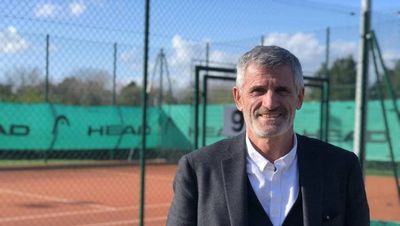
Moretton, elected in 2021 and making positive changes
The UK haven't had 5 WTA top 100 singles players at the same time since 1984, but did have 4 earlier this year. Let's now focus on the WTA powerhouse nations.
Along with the USA, both Russia and Czech Republic are the other big powerhouses of women's tennis. It's worth noting that many Russian players migrate to europe (roughly 45%) or the USA (roughly 20%) at an early age to pursue their tennis careers, but roughly a third who make it did so by staying based in Russia.
Legendary coach Larisa Preobrazhenskaya is worth noting as she was instrumental in the success of a long list of Top 20 WTA players including Grand Slam champions and World No.1's. She typically worked with them from ages 5-11 with her unique method that she felt would make it impossible for any future coach to mess up their games. She did this at a crumbling club on the outskirts of Moscow that had just 2 unheated indoor courts through the long brutal russian winters.
Her coaching philosophies were as follows:
Footwork and movement first: She argued that if a player’s feet are out of position, even the most textbook swing will fail. Children at Spartak were famously banned from holding a racket for up to six months. Instead, they spent hours doing balletic balance exercises, shadow strokes, sprinting, and throwing medicine balls. She wanted her juniors to move with the grace and coordination of gymnasts before they ever attempted to strike a tennis ball.
Natural fluidity: Her technical philosophy was centered on relaxation, rhythm, and natural kinetic chain acceleration. She taught her players to keep their shoulders and wrists completely loose, allowing the racket head to whip through the ball naturally. This allowed her female students to effortlessly match the raw power of physically stronger Western players.
Delayed competition: She believed playing matches too early forces a child to develop bad, defensive technical habits (such as pushing the ball over or moonballing) just to win points out of fear. Instead, she focused entirely on drilling proper, aggressive, fluid stroke mechanics through high-repetition basket feeds until ages 10/11.
Holistic care: She did not just see herself as a tennis coach; she embraced the holistic upbringing and moral education of the children she taught.
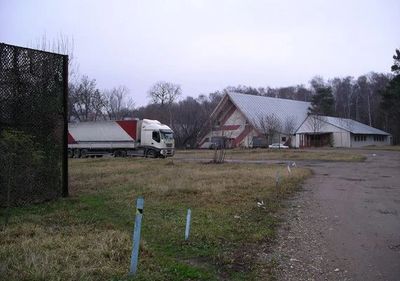
Spartak Club in Moscow, where Grand Slam Champions were nurtured
Before we finally move onto the Italian model, let's look at argubly the GOAT of top tennis performance production, which is the Czech Republic's ongoing ability to consistently produce high level WTA players.
The Czech Republic became an independent country in 1993 (with the shortened name Czechia approved in 2016). With a relatively tiny population of 10 million and just 10,000 actively competing juniors, it regularly maintains between 12-15 top 100 WTA players. They've produced 5 different Grand Slam champions, a World No.1, and over 10 top 10 players. They also have notable success in the men's game, so how have they achieved all this?
Firstly, they operate a decentralised model (again like so many successful countries). Virtually every town and village has a modest club with 3 to 4 red clay courts (a positive legacy of the communist era) that cost almost nothing for a family to join.
Juniors train in a completely different way to anything we've already covered!
Czech tennis strongly rejects pooling together good juniors at any age. There is instead a huge emphasis on developing junior players as individuals with the same long-term committed private coach. Players are raised in their local clubs as "lone wolves". This means they aren't sparring with their peers, but instead are allocated a court, a basket of balls, and their coach all at their local club. They may also spar and gain match practice with older club members.
In the winter, these clubs put up inflatable heated air domes so the training can continue in the same way. Players will also often clear snow from the outdoor hitting wall, and hit in the freezing conditions for 30-45 minutes to test their mental resilience and commitment to their progress.
Their development is done individually in this way until at least age 14. Top prospects at age 14-16 can then transition to one of the 3 top clubs in the country. However, even then, the players often don't train with each other. They continue with an individual coach, and also hit with strong adults, including current and former pro's.
If the bond between the player and their original coach is strong, the club will hire the coach to continue working with that player. If the coach is unable to relocate, then they will continue working with the player collaboratively with the new club. Sometimes, the player simply trains at the new club a few times a week, and maintains the bulk of their training at home with their original coach.
Despite the 'lone wolf' ideology, Czech juniors play an intense program of club matches and junior tournaments from a very young age (6-7 yrs). In May and June, all players play a gruelling fixture list of inter-club matches involving singles and doubles, in fiercely competitive environments (like in Argentina) where the pressure and honour of representing your local club act as a big test. In July and August, the scene switches to a full schedule of individual singles tournaments. Through the winter, the competition continues indoors. Juniors never have to travel too far, and can sleep in their own beds because travelling distances are so manageable.
Jan Stoces, the head of the Czech Tennis Federation believes that a federation’s primary job is to flex around the athlete, not the other way around. He also attributes their success to coaches who do such a great job taking an individualised approach with each player.
The 3 main clubs are heavily subsidized by the Czech Tennis Federation and major sponsors, meaning elite prospects pay virtually nothing for training.
The conveyer belt of WTA and ATP champions mean that aspiring juniors can see that a career in pro tennis is perfectly achievable.

Czechia - A very small country doing consistently big things in tennis!
Earlier this summer, Judy Murray launched a scathing attack on the LTA junior development pathway and the state of British Tennis, and suggested we should follow the highly successful Italian model. More details on what she said later, but let's now look at what the Italians have done over the last 15 years that has created the current golden age of top Italian players?
In 2009, the Italian Tennis Federation completely overhauled their junior development system. They currently have 5 players in the ATP Top 40, including world No.1 Sinner. All 5 were around 7 years old when the system was overhauled. Italy have also won the last 3 editions of the Davis Cup, and the last 2 editions of the Billie Jean King Cup.
What did Italy change?
To address decades of underachievement, the Italian Tennis Federation (FITP) broke away from a rigid, centralized training format and transitioned toward a collaborative, decentralised model.
Prior to 2010, the federation forced top teenage prospects to leave their families and their childhood coaches to live at a central national training facility in Tuscany (with an alternative hub in Rome). The reform reversed this by allowing and encouraging top juniors to remain at home with their original, private coaches. The federation stepped in to support these private coaches and their local clubs by offering financial grants, technical data, and physiological assistance.
This isn't just open to selected 'bigger' clubs, it is fully available at every one of Italy's 2500 registered club venues that deliver junior coaching. If a promising junior emerges from a very small club, the FITP will step in and provide funding. This is fully designed to allow the player to stay at their home club with their original coach.
Furthermore, the FITP will fast-track the coach's qualifications if needed, to recognise the great work they're doing and ensure their professional development is supported. Also, the player and coach will be invited together to attend regional training/matchplay days. This allows the junior to get high-intensity sparring against other top players, while their personal coach receives hands-on mentorship from national directors.
To help with the financial strain of international travel for juniors, Italy also flooded the country with low-level professional events. Italian teens could earn professional ranking points and test their skills against international opponents in their own backyard.
Italy's new de-centralised model paved the way for the remarkable story of Lorenzo Musetti, who's local club coach started working with him at age 8, and remains his coach today having helped him to a world ranking peak of No.5. Here are a few quotes from his coach Simone Tartarini:
We have been working together for more than 15 years, we have been through a lot, and he continues to this day to dream. And I continue to work with him and believe in his dreams. Our main priority is to avoid confusion. He has so many shots, but we try to keep tactics simple. Never, never I am angry with Lorenzo. Never during 15 years... I have known him since he was a child, and now he is a mature man with children of his own.
Such partnerships are very rare, but another example is that of up-and-comer Alexander Blockx from Belgium who has cracked the Top 20 this year, and had the same coach since age 4 right up until this spring.
Italy - Davis Cup Champions 2023, 24, and 25. The last time was 1976
Just a quick side-track, whilst we're on the subject of long-term player/coach relationships.
As many as 30% of aspiring junior players are coached primarily by one parent during their junior years, and some of those stay with them onto the pro tour.
Current examples include Zverev, Shelton, Tsitsipas (though with a few recent break-ups!), Ruud, Korda, Gauff (her father took her to top 10 before they added anyone to the team), Kenin, and Fernandez, and Italians Darderi and Cobolli, who were obviously both fully supported by the governing body with the parent coach set-up. Darderi's father coached him from the beginning, whilst Cobolli's father purposely backed off until his son was 17 at which point he took full control of his coaching.
The UK's centralised model does support parent coaches as long as they make the large financial and time commitment to become certified performance coaches. This might reduce the possibility of a Venus and Serena Williams in the UK, given Richard Williams was completely self-taught, and never achieved an official coaching qualification in his life!
There are countless other examples of non-qualified tennis parents acting as sole coach and taking their child to the highest levels of the game, including Brit Billy Harris who's Father Geoff took him to the top 200 with no qualifications, little playing ability, and obviously outside of the LTA pathway. More on Billy later!
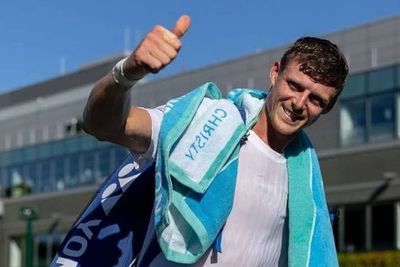
Billy Harris - coached by his father who had no qualifications
LTA's history with centralisation and decentralisation:
Back in the 1980's, the LTA's performance pathway didn't exist, and they didn't take much interest in promising juniors until they were 11-12 years old. David Lloyd challenged the system, by scouting players aged 9-10. With the help of millionaire financier Jim Slater, he set up the UK's first integrated tennis/education boarding academy at Reed's School, with players recieving intense training 3-4 hrs per day, including Tim Henman. Henman left home age 11 to board at Reed's School, and pursue his tennis fully funded by Slater. He went on to have a stellar career, peaking at No.4 in the world, and making semi-finals of 3 of the 4 Grand Slams.
When Henman dominated the British national championships in 1992 as an 18 year old, the LTA took notice and spent the next 5-10 years slowly integrating the boarding school model that David Lloyd had dreamed up. This was the start of the LTA's heavily centralised model for player development, and from 1997-2003, top British juniors were mandated to leave home and train at select regional performance hubs to maintain funding, a structure that created tensions with independent clubs, coaches, and academies. It's worth noting that Henman was able to stay at Reeds the whole time from ages 11-18, giving a level of stability that all future LTA versions didn't offer, and still don't.
From 2007-2013, the centralization strategy reached its peak under CEO Roger Draper (Jack Draper's Dad) with the £30million National Tennis Centre opening in Roehampton, and the LTA insisting that the nations best junior and senior players must base themselves there in order to receive their funding. Those who didn't had their funding cut to zero, and weren't considered for wildcards to top events, whilst centres around the UK that had previously been regional performance hubs, were cut off by the LTA unless they handed their best players over to the NTC set-up. It was a brutal time.
GREAT BRITAIN IS THE TOP POWERHOUSE FOR MEN'S DOUBLES IN THE WORLD!
Of course, this was also the start of the incredibly successful Louis Cayer era, which transformed our doubles. Initially when the NTC opened in 2007, they provided nothing for doubles players at all, with the sole focus on developing a singles champion. However, Cayer's hiring later that year (on the advice of Judy Murray of course) changed all that, as he immediately insisted the NTC was able to cater for doubles players, and all aspects of his doubles training program. The crucial difference here was that whilst singles players were expected to completely commit to the NTC for their training (or be cut-off by the LTA), doubles players were allowed to use the venue and the training Cayer offered, as and when it suited them. Mainly focused on 18yrs+, players who wanted to specialise in doubles, or who wanted to pursue doubles as a back-up to not making it in singles, were offered Cayer's training, which has single-handedly transformed our doubles success.
He did it through the philosophy of doubles being an exact science not an art, with a big emphasis on positioning during rallies, scripted set-plays, and a doubles team being a single emotional entity rather than two individuals. Cayer's teachings have always been made widely available for all LTA coaches of all levels.
Following ever-increasing pressure to change the failing centralised model for singles players, the LTA brought an end to it in 2013, allowing juniors to fend for themselves.
In 2014, they hired famous Australian coach Bob Brett to oversee the decentralization. He initiated sweeping ruthless cuts to player funding and talent ID schemes, and told the LTA to dramatically reduce the handout of wildcards into British grass-court events including Wimbledon. Brett believed players should only get into higher level home tournaments by earning their place on merit, a policy that I don't think any other country has ever implemented. Incredibly over the following years, Wimbledon often didn't use their full allocation of wildcards!
The LTA diverted financial resources back toward the grassroots club network but with a focus on entry level tennis for kids, and participation numbers. They didn't support or activate the vast club/coach network to help manage higher level juniors. This whole period was widely accepted as being a difficult one, and it wasn't long before the latest junior development pathway was launched.
2018-current: The LTA launched it's 10 year performance strategy, and established a structured hybrid model, an improvement on the total centralisation seen a decade earlier, but also a return to a rigid approach of encouraging juniors to move to select venues and then regional hubs.
The era of Regional Player Development Centres (RPDC's) for players aged 10-14 was born! They are subsidised by the LTA, but parents would still be paying roughly a £6000-9000 contribution per year. The 17 RPDC's then feed to a separate national academy in Loughborough for players aged 13-18, that links with local boarding schools so players can live and train in Loughborough.
Finally, the NTC acts as the national hub for all elite national players, so those on the lower rungs of professional tennis can move from Loughborough to the NTC. For those who aren't ready when they finish at Loughborough, the LTA supports them with the US College option, or a UK based option, and may also provide funding and NTC access if they believe in the player's long-term potential to reach the top 100. This is a big positive step forward by the LTA, as in past era's, they never offered such support to these players. If they weren't good enough at 18, they used to be cast out to fend for themselves.
From this month (September 2026), the LTA are further squeezing out the vast majority of clubs and coaches by introducing a similar venue system called the 10U Performance Network. This involves 32 designated venues across the country for players aged 7-10, with strong incentives for parents to join one of these 32 programs, including financial incentives and the promise of coach attendance at tournaments, and access to S&C specialists and psychology workshops.
The 32 venues are split into two tiers, namely 'enhanced' or just normal. It's worth noting that 10 of these 32 venues overlap as RPDC venues, so there are only 41 venues in total that are kite-marked and funded by the LTA for performance junior tennis, out of 2500 clubs, many of which openly offer performance tennis or might have the next Andy Murray starting out with them. The 22 new non-RPDC venues for 7-10 year olds will have the primary purpose of developing players to a good enough level to be able to move to the nearest RPDC at age 10.
As the 10U Performance Network is only launching now, there is no user experience/feedback to access, but the biggest complaint from parents and independent coaches across the UK with the RPDC system is a total lack of communication once a junior enters the RPDC pipeline. The RPDC assigned lead coach generally takes full ownership of the technical and tactical development plan. There is rarely an open-door policy where an original club coach is invited to watch sessions, feedback on progress reviews, or coordinate on tournament schedules. If an original coach disagrees with the technical changes an RPDC is working with on a player, the family is usually told that they must comply with the centre’s direction if they want to keep their subsidized spot.
Coaches working at RPDC's, and U10 Network Clubs, must also follow the LTA blueprint when delivering their programs, rather than deliver them with their own coaching philosophies. If they stray from the blueprint, they risk their program being de-kitemarked, and defunded.
Of course, there are many independent coaches and venues happily serving performance players at all ages and levels, as we do at Hawker. Many of those are also affiliated to the LTA (like ourselves), but some bigger centres have vehemently disagreed with the RPDC format, and chosen to operate completely independently.
Whilst the LTA provide little or no communication, collaboration, technical or financial support for independent coaches and venues offering performance tennis, their national training camps and national junior player grants are available on the same basis regardless of whether a player trains at an RPDC or not.

The current LTA Performance Pathway
Jamie Murray (former world No.1 doubles player, and multiple Grand Slam winner): This infamous story started in September 1998. At 12 yrs old, and already a highly ranked 12U singles player in Europe (on a par with Nadal and Gasquet), he went to an LTA boarding school training facility in Cambridge.
Within his first two weeks at the centre, an LTA coach altered Jamie’s forehand grip and technique. The forehand had been his greatest natural weapon. The modification shattered his on-court confidence and biomechanical fluidity.
Decades later, his elite doubles coach Louis Cayer noted that Jamie still carried "emotional baggage" and a mental block directly tied to that specific coaching intervention.
In her excellent autobiography, Knowing The Score, Judy Murray called sending Jamie away to Cambridge at such a young age her "biggest mistake". The story became public knowledge in November 2005, when an 18-year-old Andy Murray gave a fiery press conference accusing the LTA of "ruining" his older brother.
Jamie quit the Cambridge academy after just eight months. The psychological toll was so severe that upon returning home to Scotland, he did not touch a tennis racket for two full years, stalling his development until he transitioned to Spain and eventually found his calling as a world No. 1 doubles specialist.
Andy Murray (former world No.1, and multiple Grand Slam winner): Never spent a day in the LTA system after his older brother's experience. Judy fully managed Andy and Jamie's coaching as young children, before Leon Smith stepped in to coach an 11 yr old Andy until he left for Spain at 15, where he spent 2 years at the Sanchez-Casal academy. He soon after broke onto the tour, making 3rd round at Wimbledon at age 18.
Dan Evans (highest rank 21): He did spend time boarding at a centralised venue from ages 13-15, and quickly had success in junior competition before off-court issues lead to the LTA cutting his funding and training access on 3 separate occasions for disciplinary issues. During those breaks, he went back to his boyhood club in the Midlands to train. He nevertheless forged his way to a bumpy but incredibly successful and inspiring career given his short height and the personal struggles he endured.
His rocky relationship with the LTA culminated with him being denied singles wild cards to every event he applied for them during his retirement Swan-song this grass season, even including a Challenger event. This lead to heavy criticism of the LTA from Evans himself and many others.
Kyle Edmund (highest rank 14): Kyle was an exceptional player who didn't start playing tennis until age 10, but was then part of our winning 16U Davis Cup team! His career was sadly cut short due to a knee injury that he didn't allow to properly heal, and then became chronic.
He stayed local in Hull until age 14, when he moved to train full-time at Bisham Abbey. This was at the peak of the centralised era, but Bisham towed the LTA line and sent him to train full-time at the NTC when he turned 16. From age 18-20, he continued training at the NTC, but also regularly went to Florida for off-season training blocks arranged by Andy Murray, which proved an invaluable experience. He relocated to Nassau in the Bahamas aged 22, and reached the Australian Open semi-final aged 23, and his peak ranking before the knee problems began.
Jack Draper: Jack is an exceptional player, surging to No.4 in the world on the back of his huge lefty serve and massive forehand. He was Indian Wells Masters 1000 champion and a US Open semi-finalist last year. It's desperately sad to see him struggling as he is with injuries over the last 12 months.
Jack is also a very rare example of a player who has developed purely in the UK, but on close inspection, the LTA centralised model played little part in his development. From the age of five until he was 15, Draper's primary development took place at Sutton Tennis & Squash Club and Weybridge Tennis Academy. Jack's Mum Nicky was hands-on with Jack's coaching, but also scouted Justin Sherring, who spent a decade meticulously building the foundation of Draper's aggressive, left-handed baseline style. Only at age 16 did he transition into the LTA Performance pathway which had just re-started.
His Dad, Roger Draper, who was CEO of the LTA when Jack was aged 5-11 purposely ensured Jack's training was all conducted away from the NTC and privately paid for, to avoid a conflict of interest. From age 11-15, the LTA went through its poorly managed decentralisation period, so Jack could continue his private arrangement local to home.
Ultimately it was Nicky Draper and Justin Sherring (and not the centralised model) that played the key role in developing Jack into the world class player he is today.
Arthur Fery (current rank 36, highest 33): He never used an LTA centralised venue at any stage, choosing to stay local, and complete his education at the same school in Wimbledon.
His Mum was a constant prominent figure in his coaching, as was Alison Taylor from ages 5-12 at Westside Tennis Club, and a couple of other coaches at Sutton Academy.
He then went to Stanford University in the US from ages 18-21, before finally taking an LTA option by training at the NTC. You may remember he made his big breakthrough at Wimbledon this year, and has backed that up with a tour final in Winston Salem last month.
Cam Norrie (current rank 39, highest 8): Developed his tennis in Auckland until age 15, before transitioning to the UK between ages 15-18, and heading over to US College TCU for 3 years between ages 19-21. By the end of his time there, he was quickly moving up the rankings.
Jan Choinski (current rank 74, highest 74): Grew up in Germany, and only became British at the age of 23 when he used his mother's British citizenship to relocate.
Jacob Fearnley (current rank 97, highest 49): Played locally from age 3-11, and then stayed local by going to an independent boarding school in Edinburgh that also specialised in tennis. He stayed there right up until he went to US College at 18, playing for TCU (same as Norrie) for 5 years before making his breakthrough on the tour.
Toby Samuel (current rank 95, highest 95): Started local in Bournemouth, and was able to stay there throughout his junior years because at the age he would have been expected to go to a centralised venue, they had all been decommissioned as LTA pathway venues during that period 2013-2017.
He rejected a move to the NTC when it reopened in 2018 to stay with his original coach, who coached him in Bournemouth from age 10 until he took the US College route with 4 years at the University of South Carolina at age 18. However, his same coach Shane Deacon remained an integral part of his development from afar, and continues to be part of his team today.
Samuel has enjoyed an incredible rise since college, from a ranking near 1800 to almost breaking the top 100 in the space of just 18 months. A great effort and exciting prospect!
Billy Harris (highest rank 101): His tennis development is one of the most remarkable, self-funded journeys in modern tennis history. Bypassing the standard high-performance pathways, Harris' Dad was a prominent figure in his development throughout his childhood years, and well into his 20's, also with the help of an independent academy during his early teenage years.
With no background in tennis and no coaching qualifications, Geoff Harris took his son to the Top 200. Billy finally integrated into the NTC set-up in 2024, at age 29, and the LTA's Colin Beecher has co-coached Harris with his Dad since then.
Jack Pinnington-Jones (current rank 189, highest 132): Started age 7, and trained at independent Tennis Avenue School from ages 8-12, before spending 2 years in Bournemouth at the same time as Toby Samuel. The pair trained with each other and pushed each other on.
He did then spend 2-3 years based at the NTC when it reopened to elite players in 2018, before doing 4 years at TCU in the US.
Harry Wendelken (current rank 175, highest 175): Harry grew up in Cambridgeshire, starting tennis at age 5. He did train at a local LTA High Performance Centre from age 10-12 before the LTA decommissioned it as an LTA Pathway venue (as part of the de-centralisation plan 2013-17). Harry stayed with the same coach for 2 more years, and then when his coach moved to independent Culford School to manage the new tennis program there, Harry followed so he could keep the same coach.
At age 16, he opted to train in Sweden for 2 years before becoming pro and slowly working his way up the lower pro ranks.
It's worth noting there are 10 UK players ranked between No.200 and No.300, so it will be interesting to see how they progress, though I haven't researched their histories! I'll do so and update this page for those who make progress.
Emma Raducanu (current rank 89, highest 10): From ages 6-10, she trained at her local club in Kent, and then her crucial development years from 11-16 were all managed at Bromley Tennis Centre. This period coincided precisely with the LTA's decentralisation period, so there was no rigid pathway that Emma was expected to follow.
She did however transition to the NTC aged 16-18, but not full-time as her hours were heavily split between tennis and A-Levels. She famously didn't play at all during April and May of her A-level year, before reaching the 4th round of Wimbledon just over a month later, and then came her historic triumph at the US Open 2 months after that!
She never had the same coach for a prolonged period during her junior development, a trend which she has continued as a pro!
Katie Boulter (current rank 53, highest 23): Started tennis aged 5, with her Mum (who was a coach) overseeing those early years. The Boulter's rejected the centralised model that was in place at the time, which cost them their LTA funding. They were adamant that Katie should stay local as a junior.
They were instead charity funded, and she had the same coach for 6-7 years from age 9, and utilised top class local venues at Loughborough and Nottingham. She did then move to the NTC aged 15-17, before slowly climbing the pro rungs.
Fran Jones (current rank 106, highest 65): Born with a rare genetic condition which left her with three fingers and a thumb on each hand and three toes on her right foot, she spent much of her childhood undergoing extensive surgeries. When doctors explicitly told her she could never play professional tennis due to grip and balance issues, she didn't listen!
At the age of just 10, she relocated to Barcelona as the softer clay courts were easier for her to manage her physical limitations. She stayed in Spain until 17, when she joined the elite program at the NTC for a short period before breaking into the lower professional ranks.
Sonay Kartal (current rank 121, highest 44): Developed from a young child into a professional player alongside the exact same coaching unit at the same local grassroots club, the Pavilion and Avenue Club in Hove.
She was coached predominantly by Julie Hobbs and Martin Reeves. Even after breaking into the world's Top 50 and to this day, she still conducts her training with the same team in Hove when she is in the UK.
She had terrible growth-related injury issues during her teenage years, and was severely limited in how much she could play from 13-17. She never qualified for LTA funding because her ranking was never high enough. When she was able to prove her level at age 19, she was welcomed into the NTC programme, and she credits the highly advanced physio department at the NTC for allowing her to fully get over her injuries.
Harriet Dart (current rank 112, highest 70): Stayed local from ages 7-13 before fully committing to one of the LTA's centralised regional hubs where she lived and trained 5 days a week. At 17, she did a lot of travelling, including some training abroad, before relocating her base back to a different local club in London at the time when the centralised model was being disbanded in 2013, meaning the NTC wasn't available. She properly started her journey up the rankings in 2014.
Katie Swan (current rank 187, highest 118): Started playing by chance aged 7 whilst on holiday. Stayed local at David Lloyd Bristol from ages 7-11, then transitioned to an LTA High Performance Centre from ages 11-14, but stayed living at home as it was less than an hour travel time. At 14, her family relocated to the Kansas in the USA, and her training continued in America. She is still based there now at age 27, but does use the NTC as a training base during European tournament swings.
There are no other GB players currently in the top 200.
That concludes a good look at how the most prominent British players of recent and current times managed their junior development years. It's clear that the majority either rejected the centralised LTA Pathway, or their crucial teenage years coincided with the 2013-17 period when the Pathway wasn't available.
Jamie and Andy Murray - The pinnacle of Great Britain's tennis success